Request support on coordination, information management, capacity development or other education in emergencies areas.
Demande de soutien en coordination, gestion de l’information, développement des capacités et autres domaines de l'éducation en situation d'urgence.
لطلب الدعم في مجال التنسيق ، إدارة المعلومات ، تنمية القدرات أو في اي مجال من مجالات التعليم في مناطق الطوارئ
Solicitar apoyo en coordinación, gestión de la información, desarrollo de capacidades u otra áreas en educación en emergencias.

The Global Education Cluster participated in the 2026 Humanitarian Networks and Partnerships Week, bringing together country clusters with global and local partners to discuss adaptation to the new humanitarian coordination environment and education in emergencies.
As the humanitarian sector grapples with new challenges and increasing instability, the Humanitarian Reset presents an opportunity to embed meaningful reforms in critical areas. To this end, the GEC presented its work around transition towards locally-led coordination, centering the priorities of children and young people, and acting ahead of, and responding rapidly to, crises to ensure continuous learning.
Click to jump to each section:
- Sustaining Coordination Beyond Deactivation: Advancing Locally-Led Transition | recording here
- Children and young people tell us what they need. Response plans reflect some of what they said. Funding reflects none of it | recording here
- Advancing Anticipatory Action (AA) and Preparedness for Life-Saving Education Response – Progress and Learning | recording here
Transitioning to locally-led coordination
On March 5th, as part of the online portion of Humanitarian Networks and Partnerships Week, local and international actors convened to discuss how coordination can be sustained through transition and deactivation of clusters. The aim of the session, titled “Sustaining Coordination Beyond Deactivation: Advancing Locally-Led Transition”, was to move beyond policy discussions to focus on practical solutions that strengthen national leadership, institutionalise coordination mechanisms and ensure that humanitarian action is effective and accountable.
Coordination of responses to humanitarian needs should be led by national and local actors, including, but not limited to, States, which have the responsibility, first and foremost, to take care of the victims of natural disasters and other emergencies occurring on their territory, as established by the United Nations General Assembly.
Clusters are temporary coordination mechanisms, activated by the Inter-Agency Standing Committee (IASC) to respond to emergencies. As crises evolve, the goal is to transition coordination responsibilities to national and local actors before formally deactivating clusters. In practice, however, this transition is not always systematically planned or adequately resourced. Too often, cluster deactivation risks fragmentation in the response and reduced engagement of local actors, despite the fact that they remain at the forefront of emergencies.
Participants in the session shared examples from diverse contexts, including Ukraine, Libya, Lebanon and Cameroon, and vantage points to illustrate how transition can create an opportunity to strengthen leadership by, and accountability to, local and national actors. But, the process should be deliberate and incorporate engagement from local actors from the outset and more work needs to be done to ensure coordination mechanisms are embedded in national structures. Some participants cautioned that, without sustained coordination structures, humanitarian assistance will continue, but the sector risks returning to the very challenges that clusters were created to address, such as duplication of efforts, misaligned strategies, and actors working from a multiple, differing sets of data and information.
A key contribution to the effort to ensure responsible transition, is the step-by-step guidance and tipsheet developed by the Inter-Cluster Group on Localization, designed to support cluster teams through all phases of the transition and deactivation process.
A main takeaway of the session is that deactivation should not mark the end of coordination. Instead, it should represent a strategic investment in resilient, sustainable, nationally led systems that place humanitarian leadership in the hands of those closest to affected communities.
Centering the priorities of children and young people
What do children and young people need most from humanitarian assistance? What are their top priorities? And how can the Humanitarian system be more responsive to them, especially as it goes through the Reset?
This was the subject of discussion at an HNPW side event: “Children and young people tell us what they need. Response plans reflect some of what they said. Funding reflects none of it”. The event was organized by the Global Education Cluster, The Alliance for Child Protection, Save the Children, Plan International, Norwegian Refugee Council, and Geneva Global Hub for Education in Emergencies to better understand what accountability means to children and young people and help humanitarian actors meaningfully involve them in responses.
The speakers included several young people from Mali, Nigeria, Ukraine and Uganda who offered insights about their direct experiences interacting with the humanitarian system.
While there have been successful examples, participants emphasized the gap between the consultations held with young people and concrete action taken based on their feedback. Young people reported that consultations can feel tokenistic: insights from children and young people are used for data collection and initial reports, but the engagement often ends when it comes to actual program design and implementation.
Other times, even when young people are consulted and their priorities are reflected in humanitarian response plans, they noted that the financing does not actually correspond to their stated needs and priorities.
All of the young speakers articulated their priorities around access to quality education and intersectoral service delivery, including gender-based violence protection and psychosocial support, as well as overall involvement in local decision-making. But, instead, funders tend to prioritize easily measurable programs that can be implemented in short cycles, resulting in misalignment in long-term needs.
Ultimately, young people expressed the need to be regarded as partners, not beneficiaries.
Despite these challenges, there have been successful examples. The GEC shared its newly released briefs on child participation conducted as part of Joint Needs Assessments, which provide a template for meaningful engagement with children and young people at scale.
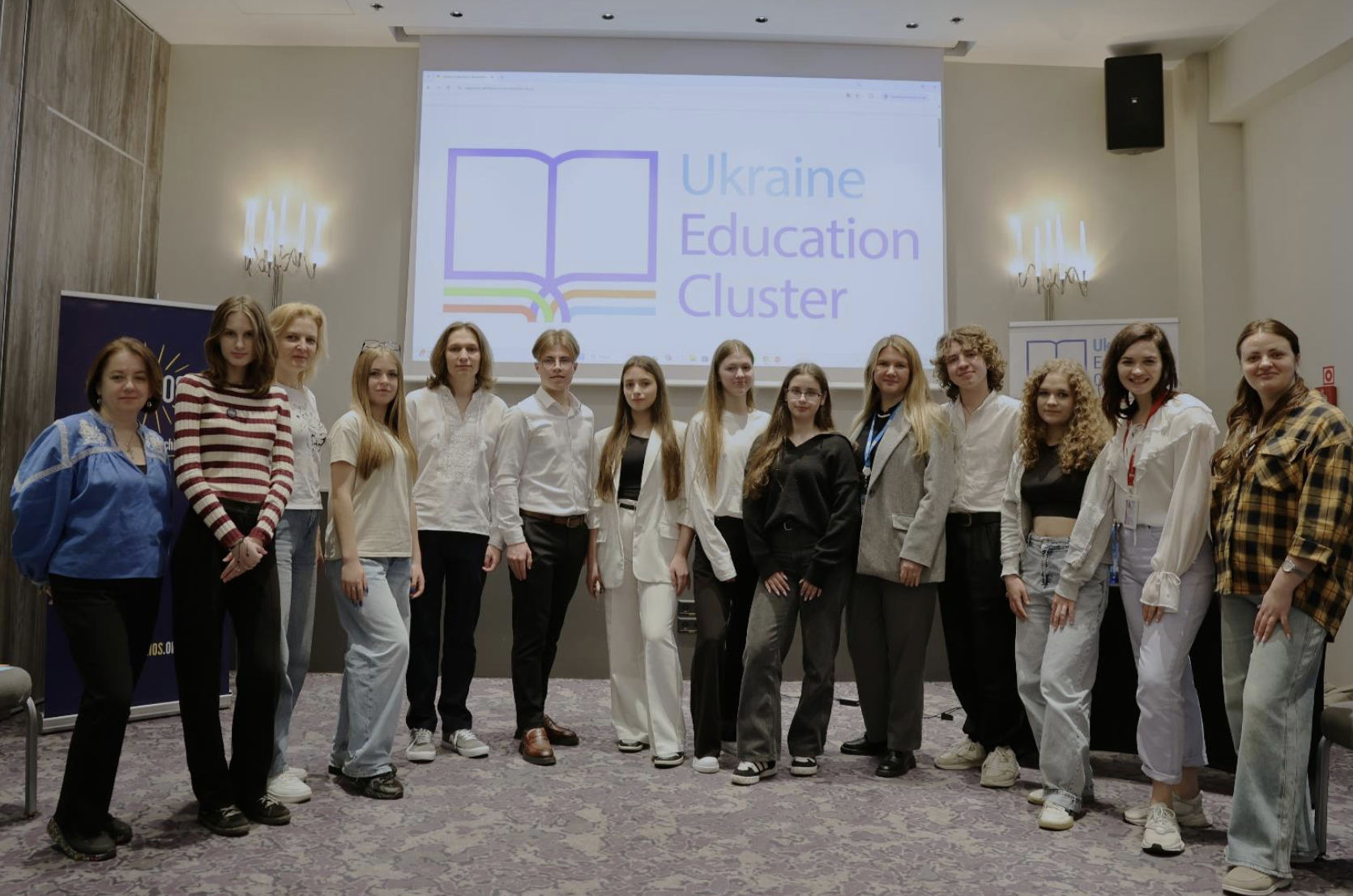
And, the Ukraine Education Cluster established a Children’s Strategy Advisory Group (SAG) as a permanent body to inform humanitarian decision-making for the education sector.
Yehor, a member of the Children’s SAG, gave a powerful testimony describing the wartime conditions under which children are studying. Amid air raids, sirens, and missile attacks, students continue to do homework and take tests, often without electricity or proper shelter infrastructure. In February 2026 alone, Yehor had to take shelter in the middle of classes 15 times and recounted sleeping in his bathroom - the safest place away from windows - since there is no shelter near his home.
Through the Children’s SAG, students were able to articulate their needs for psychosocial support, national standards on shelters, and adapted expectations around national exams, and better advocate for an accountable education response.
Mattias Schmale, UN Resident and Humanitarian Coordinator for Ukraine, wrapped up the session with several concrete commitments for accountability to children and young people: to ensure that youth-led organisations will be better considered in future funding allocations from the Ukraine Humanitarian Fund; to disaggregate data by age and sex in future Humanitarian Needs and Response Plans to better serve their demographic; and finally, to help contribute to a mindset shift among humanitarian actors who don’t instinctively see education as lifesaving work. Instead, we need to listen to the voices of young people, who see education as part of a dignified future.
Yehor echoed this perspective: “Education during war is not only about textbooks; it is also about safety and hope. Ukrainian children do not ask for special treatment, we are asking for something very simple: to be safe, to be heard, to have the opportunity to learn. Because education today means the future of Ukraine tomorrow.”
Acting ahead of crises to ensure continuous learning
In an era of scarce funding and increasing conflicts and disasters, renewed importance has been placed on preparedness, Anticipatory Action (AA) and rapid response in emergency settings. At least half of crises are partially predictable, meaning that acting in advance can save lives and reduce the impact of hazards on education infrastructure, education personnel, learners and their communities.
Over half of contexts with activated education clusters have documented inter-agency work on preparedness, AA and rapid response - up from zero in a matter of years, reflecting the increased emphasis across the sector. To take stock of that progress and learning, the GEC and the Geneva Global Hub for EiE hosted a session, Advancing Anticipatory Action and Preparedness for Life-Saving Education Response – Progress and Learning, on March 12th, where over 15 education clusters and partners shared their interagency initiatives on preparedness, AA and rapid response, and discussed the bottlenecks and solutions to the education sector’s work in these areas.
During the event, four country clusters shared examples covering different phases of a crisis: building preparedness through contingency planning, mitigating the impact of hazards on learning continuity by acting in advance through Disaster Risk Reduction (DRR), and Anticipatory Action, and responding rapidly once a shock occurs.
The Mozambique Education Cluster shared its experience from the recent flood response. Flooding in the earlier part of the year affected more than 200,000 students and 800 teachers across 300 schools. The floods occurred at the end of a school break, right as the academic year was about to restart. The government made the decision to postpone the reopening of schools, meaning that children were out of class from November to the end of February. The Education Cluster took this time to put in place plans to ensure the continuity of learning.
One major barrier to children’s access to education was that 96 schools were being used as temporary accommodation centers. Through an integrated approach with child protection actors, the education cluster organised informal education activities in child-friendly spaces within the accommodation centers: flipping on its head this common barrier to education in first phase emergency response. This combination of preparedness work by the cluster, together with intersectoral coordination, and in conjunction with government leadership in designing activities, facilitated the return to formal schooling and mitigated the loss of learning during the acute disaster period. Mozambique is also part of the ECHO-funded Rapid EiE project which will produce a contingency plan contextualized for its rapid education responses in emergencies.
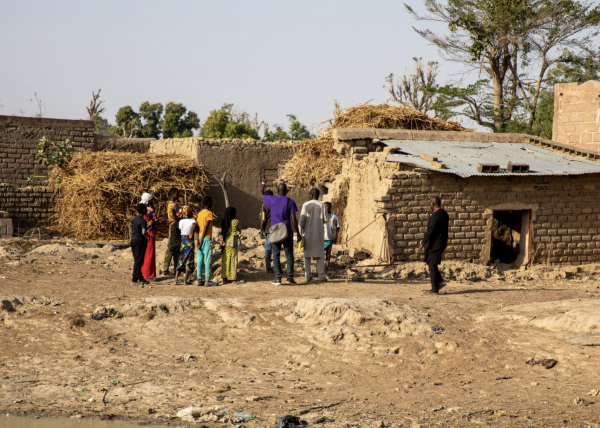
The Mali Education Cluster offered its experience with contingency planning, which they have conducted on a national and subnational for several years. After flooding, heatwaves, conflict and epidemics in different regions of the country continues to disrupt schools and significantly impacts children’s education, the cluster emphasised the importance of developing contingency plans for these hazards. The cluster ensured that its plans were aligned with the Ministry of Education, intersectoral plans in the wider region and the Mali HNRP, resulting in better preparedness of education actors in the face of these challenges.
In Ethiopia, the education cluster provided specific examples of Disaster Risk Reduction activities implemented in the Gambella region - longer term planning and activities to ensure the continuity of education during flood season. A key example was to work with the Education Authorities to adapt the school calendar and train teachers to deliver the condensed curriculum to mitigate the learning loss that was experienced on an annual basis as a result of the floods. These longer term DRR efforts were complemented by AA in the days preceding the flood. Once a trigger is activated – set 7 days in advance by the national meteorological service – AA activities were initiated to divert water away from schools, including by placing sandbags and digging ditches in the most critical areas. By understanding the risks and forecast, they were able to adapt learning accordingly. Ethiopia is also part of the ECHO-funded Rapid EiE project.
Lastly in Pakistan, the Education Sector Working Group recounted how it developed a framework for AA – the first of its kind in the country for education. While Pakistan faces severe climate disasters every year, the floods of 2022 were particularly critical and prompted renewed attention on Anticipatory Action for education. The Pakistan Education Sector Working Group worked closely with national authorities, including non-education actors, while receiving technical support from agencies on the ground, guidance from GEC, and funding from ECW, to pioneer the new AA framework that safeguarded education through school evacuations, learning continuity plans and teacher training among other activities. Through this approach they were able to reduce the impact on schools and students and ensure the continuity of education with less investment and risk.
The GEC will continue to document learning and examples across country clusters and contribute to sector guidance.
Resources:
