Request support on coordination, information management, capacity development or other education in emergencies areas.
Demande de soutien en coordination, gestion de l’information, développement des capacités et autres domaines de l'éducation en situation d'urgence.
لطلب الدعم في مجال التنسيق ، إدارة المعلومات ، تنمية القدرات أو في اي مجال من مجالات التعليم في مناطق الطوارئ
Solicitar apoyo en coordinación, gestión de la información, desarrollo de capacidades u otra áreas en educación en emergencias.

The latest data on attacks on education confirmed a bleak reality: attacks on education are on the rise globally.
GCPEA’s new report shows a 40% increase of attacks on education from 2024-2025, with the highest incidence of attacks in countries where education clusters are activated, including: Colombia, Democratic Republic of the Congo (DRC), Ethiopia, Haiti, Palestine, and Ukraine.
Beyond the immediate harm caused to students, teachers, and education personnel, attacks on education create significant challenges for the continuity of learning. When schools are damaged, occupied, used as shelters, or deemed unsafe, children can lose access to education for weeks, months, or even years. Education partners are often required to adapt quickly, by establishing temporary learning spaces, expanding remote and alternative learning modalities, rehabilitating infrastructure, and advocating for schools to remain protected civilian spaces.
The Global Education Cluster recently released its updated Guidance on Attacks on Education, which provides a framework for country clusters to integrate the prevention, monitoring, and response to attacks on education across the Humanitarian Programme Cycle. It aims to ensure that attacks on education are systematically considered in planning, preparedness, response, advocacy, and resource mobilization efforts, ultimately helping to protect learners, teachers, and education systems in crisis contexts.
In the three country snapshots highlighted below - Ukraine , DRC and Palestine - country cluster and GCPEA data reveal the extent of the disruption attacks have on the education in emergencies response, and children share in their own words how attacks on education have affected their lives and futures.
Ukraine
“Imagine trying to study mathematics or literature or history while constantly running to a shelter.”
“During the war, studying is not only about lessons and homework. It’s also about living with constant uncertainty. Sometimes we have long power outages where there is no electricity and lights do not work. So I have to climb 20 floors with a heavy backpack full of books. But the most difficult part is air raid sirens and missile attacks. After a night of sirens and explosions, we still wake up the next morning, go to school, write texts and prepare for exams. Sometimes we even do homework using a flashlight.”
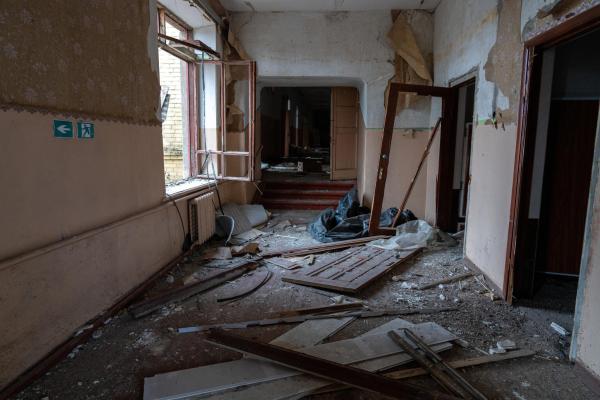
Ukraine experienced around 900 attacks on schools in the 2024-2025 reporting period, the majority involving explosive weapons, including long-range missile strikes, drones, and shelling. “In February [2026], my school had to move to the shelter 15 times because of air raid threats,” describes Yehor. “Imagine trying to study mathematics or literature or history while constantly running to a shelter.”
As of June 2026, according to the Education in Emergencies Thematic Working Group, coordinated by the Ministry of Education and Science of Ukraine, 235 schools and 142 kindergartens have been destroyed, while 1,906 schools and 1,439 kindergartens have been damaged. Overall, roughly one in six schools in Ukraine has been affected by attacks.
Despite these challenges, education continues. Today, 91 per cent of children have access to in-person or blended learning, and the number of students studying fully remotely has fallen significantly since the start of the full-scale invasion. Education authorities and partners continue to invest in solutions that help children learn safely, including the construction of underground schools, rehabilitation of damaged facilities, and expansion of safe shelters. More than 100 underground schools are already operational, with over 200 expected by the end of 2026.
Yet major needs remain. Nearly 6,700 schools require additional generators or backup power systems, while thousands more safe shelters are needed to ensure uninterrupted access to learning.
For children Yehor, these investments are about more than infrastructure. “Despite everything, Ukrainian children continue learning. Education during war is not only about textbooks; it is about safety, dignity and hope.”
Democratic Republic of Congo (DRC)
“I no longer have the courage to go to school.”
Children in the DRC continue to face some of the highest levels of attacks on education globally. The GCPEA identified at least 350 attacks on schools during the 2024–2025 reporting period, with incidents concentrated in North Kivu, South Kivu, and Ituri provinces. Attacks increased further in 2025, as escalating violence damaged or destroyed schools, disrupted learning, and forced thousands of children out of the classroom.
The consequences for education have been severe. In March 2025, more than 5,900 schools were closed due to insecurity in North and South Kivu, disrupting education for approximately two million children. In Ituri province alone, conflict damaged or destroyed 290 schools in 2025, contributing to an additional 130,000 children being out of school.
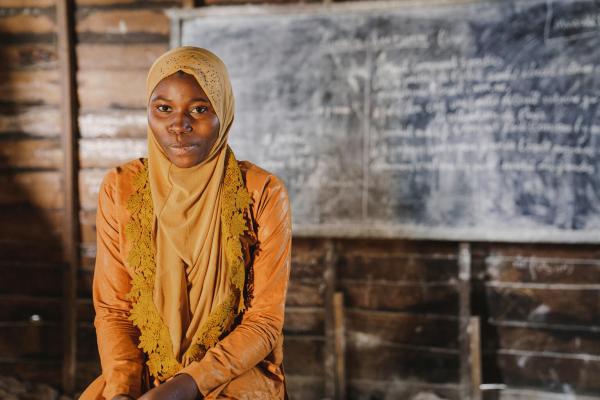
“It interrupts the classes and makes learning difficult. Sometimes, it becomes complicated to student in a normal way, to concentrate and keep up your motivation. It also affects our daily routine and our sense of security,” says a student.
One of the most alarming trends has been the sharp increase in the military use of schools. GCPEA documented at least 313 cases of military use during 2024–2025, a dramatic rise from 41 cases reported in the previous reporting period. As of the end February 2026, according to Education Cluster reporting, a total of 226 schools were reported closed due to incidents perpetrated by armed actors. These include 176 schools occupied by armed actors, 39 attacked, 10 destroyed, and 1 set on fire. These incidents continue to affect the education system, with ongoing violence targeting students, teachers, and education personnel, as well as incidents impacting higher education institutions.
The threat extends beyond school grounds. Child recruitment by armed groups remains a significant concern, with some parents reportedly keeping children at home for fear they could be recruited on their way to or from school. Teachers have also reported to the DRC Education Cluster that children associated with armed groups often struggle to attend school consistently.
As conflict continues to intensify in eastern DRC, protecting schools as safe spaces for learning remains critical. Ensuring that children can access education without fear of violence, recruitment, or occupation of their schools is essential to safeguarding both their immediate wellbeing and their future opportunities.
“My hope for the future is to be able to continue my studies in a safe and secure environment, without fear of attacks or violence. I wish to succeed in school, get a good job later and help my family as well as my community.”
Palestine
I miss the classrooms and the buildings I was used to learning in. I miss the playground and the canteen. I miss the whole school atmosphere — I love it and long for it so much.”
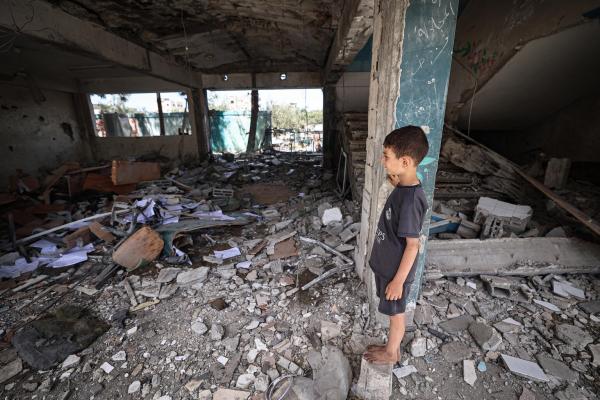
“I hope the schools come back like they were, concrete buildings, so we don't feel the cold and the heat like in the tents, and so we can enjoy at least our most basic right, which is education with dignity. I hope the school atmosphere comes back the way it was, the school radio, the competitions and that schools are rebuilt after this war that has destroyed us,” says an 11 year old student.
Palestine is one of the most severely affected contexts when it comes to violence and attacks on education, in the Gaza Strip as well as the West Bank and East Jerusalem.
According to the Education Cluster, 97.5 percent of schools in Gaza sustained some type of damage and over 93.3 percent of these were severely damaged, as of November 2025. And GCPEA reported at least 2,400 attacks on school students, teachers, and personnel during the 2024-2025 reporting period.
Since October 2023, 459 school buildings, representing 81.4% of all school buildings in Gaza, have been directly hit. Additionally, 77% of school buildings used as shelters for internally displaced persons (IDPs) were directly hit. The majority of school buildings in the Gaza Strip were used as shelters for IDPs during the war in Gaza, with 83 UNRWA schools still continuing to serve as shelters.
The Education Cluster also recorded 443 incidents targeting schools and/or internally displaced persons sheltering in schools since October 2023, resulting in 2,001 deaths. Of these, 35 incidents occurred after the ceasefire, causing 25 fatalities.
“I love reading very much, I love learning, and I love all the facilitators. I love studying and learning in a real school and I long to experience it again. I miss my friends and teachers, I used to love them so much. I miss the classrooms and the buildings I was used to learning in. I miss the playground and the canteen. I miss the whole school atmosphere — I love it and long for it so much.”
Violence in the West Bank escalated during the reporting period, directly impacting children’s access to education. Growing violence and restrictions on movement have continued to result in school closures and children’s absence from learning.
"There are settler attacks and inspections by the Israeli forces. Sometimes they beat us. They assault us and set dogs on us to attack us. Sometimes they come to our school and force us to leave. They force even the teachers to leave and beat them outside. They also scare the little children while they are at school,” explains Yousef*, age 14 who lives south of the West Bank.
In 2025 alone, GCPEA identified 158 reports of attacks on schools in Palestine, the majority occurring in the West Bank. These reports including 85 stop-work orders and pending demolitions against schools.
Beyond the 2024-2025 reporting period, there have been reports of violence against schools in the West Bank since the start of the war in Iran. In April of this year, 55 students were exposed to tear gas inhalation after Israeli forces fired gas canisters while students and their families were attempting to access their school. This occurred on what was meant to be children's first day back to in-person learning, after schools in the West Bank had been closed with all classes operating online since the outbreak of the war.
Education is too often one of the first casualties of war, significantly disrupting children's learning, wellbeing and access to lifesaving services delivered through schools.
“The children and school students need someone to notice them and support them,” says Yousef’s* mother. “They need support, for the schools to remain open, and for them to complete their education. Because right now, it’s not safe for children to reach their schools.”
*Name changed
Photo credits from Banner to bottom: UN0689600, UNI701832, UNI854739, UNI799064
