Request support on coordination, information management, capacity development or other education in emergencies areas.
Demande de soutien en coordination, gestion de l’information, développement des capacités et autres domaines de l'éducation en situation d'urgence.
لطلب الدعم في مجال التنسيق ، إدارة المعلومات ، تنمية القدرات أو في اي مجال من مجالات التعليم في مناطق الطوارئ
Solicitar apoyo en coordinación, gestión de la información, desarrollo de capacidades u otra áreas en educación en emergencias.

The Education Cluster in the Democratic Republic of Congo (DRC) has been working to promote a coordinated, multisectoral approach across the Child Protection (CP) and Education in Emergencies (EiE) sectors, for strengthened implementation of protective education programs that take into consideration GBV risk mitigation.
"This collaboration is essential for a holistic approach to addressing all the needs of children and ensuring an effective response, as children's needs span across all sectors,” comments Leonnelle Njouhou, the Child Protection Area of Responsibility (CP AoR) Coordinator in the DRC. “Indeed, lack of access to education for children exacerbates various protection risks they are exposed to, including gender-based violence, sexual and economic exploitation, and early marriages."
Humanitarian situation in the DRC
The DRC faces a severe and prolonged humanitarian crisis exacerbated by armed conflicts, underdevelopment, natural disasters and recurrent epidemics. As of 2024, 25.4 million people need humanitarian assistance, including: an estimated 7 million children out of school, 7.7 million requiring protection from GBV and 1.6 million who comprise the most vulnerable in need of Education in Emergency services and are at risk of grave violations.
In the first quarter of 2024:
32,608 cases of GBV were reported, with women and girls constituting 87% of these cases. Among these, 38% were children under 18 years old.
220,508 children received protection services from the CP AoR, including psychosocial support, family reunification, and support for survivors of GBV, representing a 58% increase from the previous year.
Girls are particularly vulnerable to sexual violence, including rape and exploitation, often used as a weapon of war in armed conflicts. They also face high risks of physical and psychological violence from teachers, peers, and community members. Humanitarian crises increase the risk of child marriages and early pregnancies, compromising girls' education and well-being.
In Eastern DRC, especially in North-Kivu, South-Kivu and Ituri, the provinces most affected by grave violations against children, children are at significant risk due to ongoing conflicts, resulting in high rates of recruitment into armed groups, kidnappings, abuse and violence. The CP AoR coordinates efforts to address child protection needs through interventions that include mobile and fixed listening points, safe spaces, and mobile clinics in strategic areas.
During the first semester of 2024, the DRC Education Cluster reported that 1593 schools were closed due to serious incidents. Among the reasons, 62% of them are attributed to recurring conflicts and 6% of them to occupation by armed groups. Violence leads to school dropouts, trauma, and learning difficulties among girls and boys, exacerbating existing inequalities in educational access.
Strengthening resilience through intersectoral collaboration
In response to these challenges, the GEC supported the Education Cluster in the DRC through technical support on reinforcing linkages between EiE-CP and GBV risk mitigation, and has also been providing strategic guidance to the cluster in the development of a new Multi-Year Resilience Program (MYRP).
Funded by Education Cannot Wait, the new MYRP will emphasize a coordinated, intersectoral approach to ensure the safety and well-being of children in crisis-affected regions, including school safety activities.
“The GEC has provided crucial support for the deployment of expertise to enhance the implementation of the MYRP. This support includes technical assistance for strategic alignment with the Humanitarian Programme Cycle, and strategies to facilitate intersectoral coordination, especially integrating child protection and GBV,” says Gilberte Amari, the DRC Education Cluster co-lead.
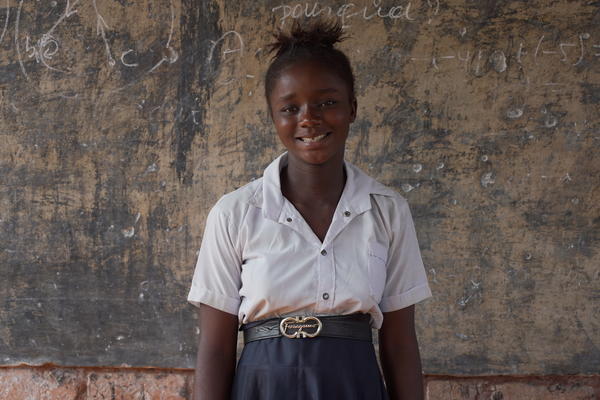
“The anticipated impact includes a consistent approach to school safety activities, better protection mechanisms for vulnerable children, particularly adolescent girls at risk of GBV, and a more robust educational infrastructure. The GEC’s support in aligning roles and responsibilities among sectors will be instrumental in addressing the multifaceted challenges in the education sector, ultimately benefiting the children we serve.”
The previous MYRP was implemented in DRC from February 2021 – February 2024 with a total seed funding of $22.2 million. The new MYRP is funded with $20 million and will be implemented from 2025. Based on lessons learned and emerging issues in the country, the upcoming MYRP will focus on new key areas.
DRC Education Cluster co-lead Amari continues: “The previous MYRP was implemented in nexus provinces (Ituri and Kasai Central), focusing on children at the primary level with some activities for out-of-school adolescents, particularly girls. The next MYRP aims to be implemented in the emergency provinces of the East, addressing the needs of the most vulnerable children in primary school and adolescents in secondary school. Targeted children will include those facing protection issues, especially adolescent girls at risk of GBV and other related risks, as well as children with disabilities."
The upcoming implementation of the new MYRP in DRC marks a significant step towards enhancing educational resilience in the DRC. The collaborative efforts among CP, EiE, and GBV sectors ensure a comprehensive approach to addressing the immediate and long-term needs of vulnerable children in the country, so that every child, regardless of circumstances, has access to a safe and conducive learning environment.
Resources
Gender Learning Brief: Democratic Republic of Congo Case Study
MYRP Protection Highlights for Context Analysis, DRC
MYRP Matrix of Results and Interventions in CP and GBV, DRC
CP EiE Collaboration in Coordination Framework
Photos from top: © UNICEF/UN0410340/Acland, © UNICEF/UN0685974/Ngombua
