Request support on coordination, information management, capacity development or other education in emergencies areas.
Demande de soutien en coordination, gestion de l’information, développement des capacités et autres domaines de l'éducation en situation d'urgence.
لطلب الدعم في مجال التنسيق ، إدارة المعلومات ، تنمية القدرات أو في اي مجال من مجالات التعليم في مناطق الطوارئ
Solicitar apoyo en coordinación, gestión de la información, desarrollo de capacidades u otra áreas en educación en emergencias.

The GEC participated in the 2025 Humanitarian Networks and Partnerships Week (HNPW) leading dialogues on Education in Emergencies (EiE) in the humanitarian sector.
HNPW took place against a backdrop of seismic changes to the humanitarian and donor landscape as well as escalating crises around the world, drawing the criticality of lifesaving humanitarian action into sharp focus.
The GEC led 3 events on localization, attacks on education and the nexus, and participated in events highlighting Anticipatory Action, early childhood education and the IASC risk session.
Through its discussions, the GEC advocated for the centrality of education in emergency responses, at a time when it is more essential than ever to harness our collective action.
Localization
The “Breaking Barriers on Localization” session placed an important spotlight on localization, particularly the experiences Organizations of Persons with Disabilities and Women-led Organizations (WLOs).
Held on 20 March, the discussion included panelists from the National Assembly of Persons with Disabilities in Ukraine and Global Village Healthcare Initiative for Africa (GHIV Africa), among others, to highlight the importance of localization in humanitarian action.
While trends show that national organizations have increasingly greater roles in humanitarian coordination, there is still a long way to go, particularly when it comes to leadership roles.
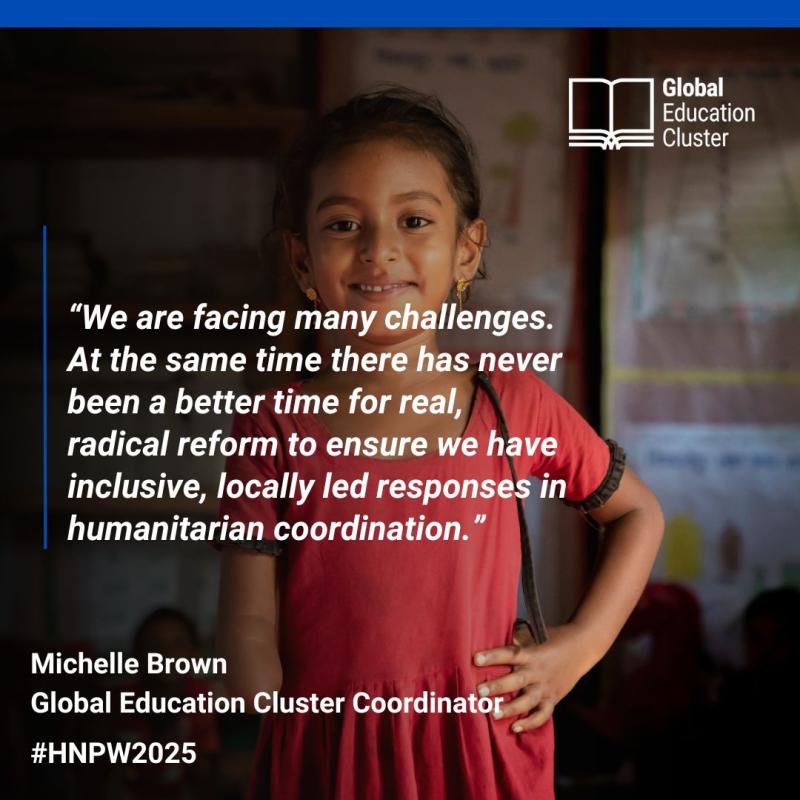
Opening the session, Global Education Cluster Co-Coordinator, Michelle Brown, highlighted that the present juncture offers an opportunity to take stock of current ways of working and refine best practices by following the lead of local actors, who are more intimately familiar with the challenges and terrain in humanitarian operations.
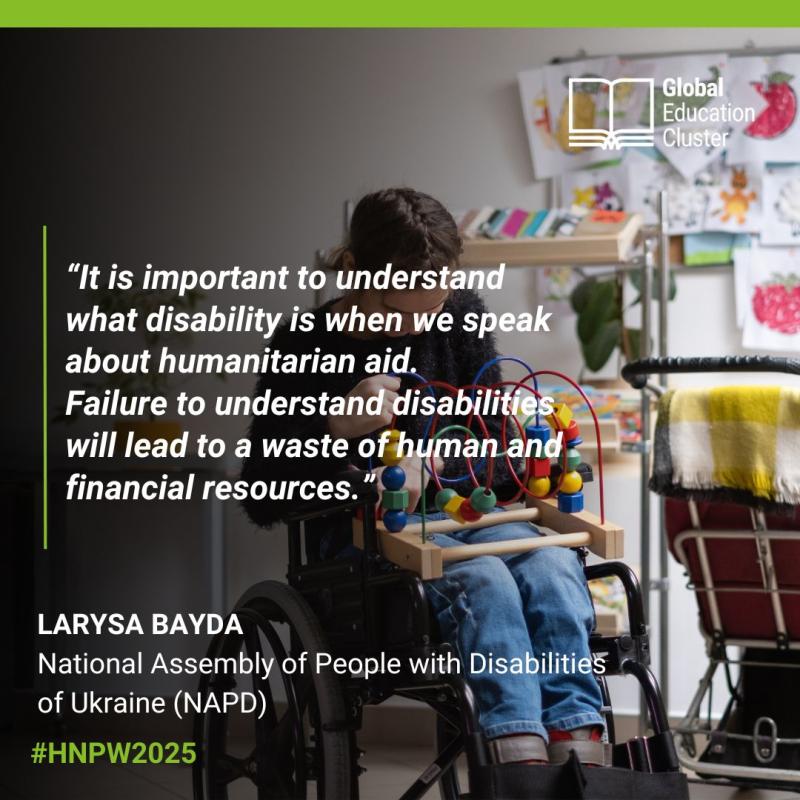
Larysa Bayda, from National Assembly of People with Disabilities, recounted concrete examples from Ukraine. At the start of the war, the aid did not take into account persons with disabilities - not everyone could access or open the foods that came in the typical food aid packages, wheelchairs that were distributed were same size and model, and many were living in remote areas that were out of access completely. In this instance, national organizations were able to advocate for the needs of persons with disabilities and inclusion of the most vulnerable populations in humanitarian aid from day 1 of a crisis.
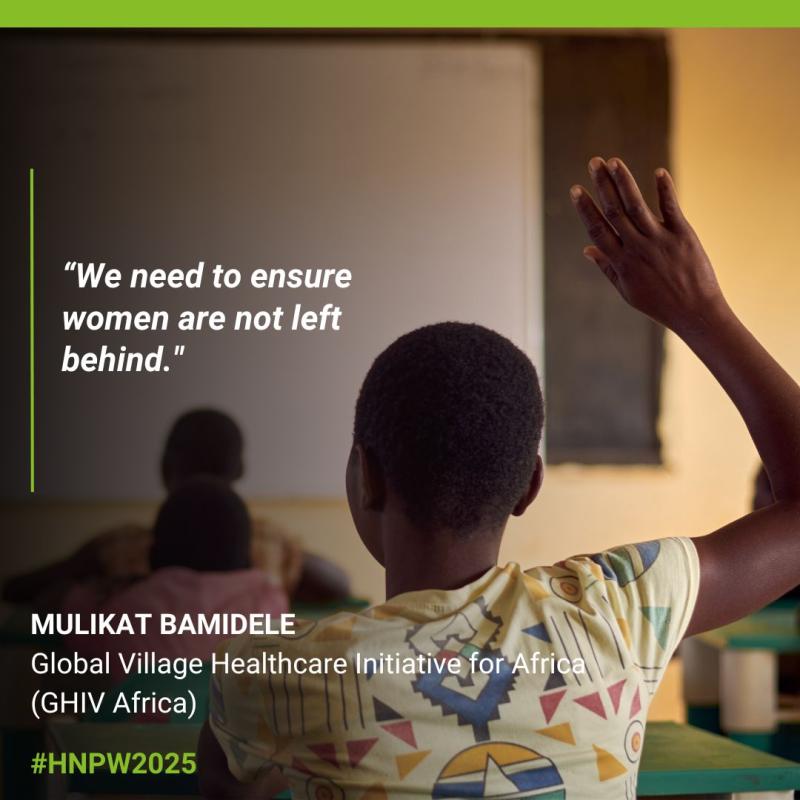
Speaking about WLOs, Mulikat Bamidele from GHIV, spoke about the many challenges women face, often operating with little technical support, in entities with weaker financial capabilities as well as competition in male-dominated environments. GHIV emphasized the need for flexible funding, tailored capacity building, and support for organizational development to make a concerted effort to elevate WLOs to leadership roles.
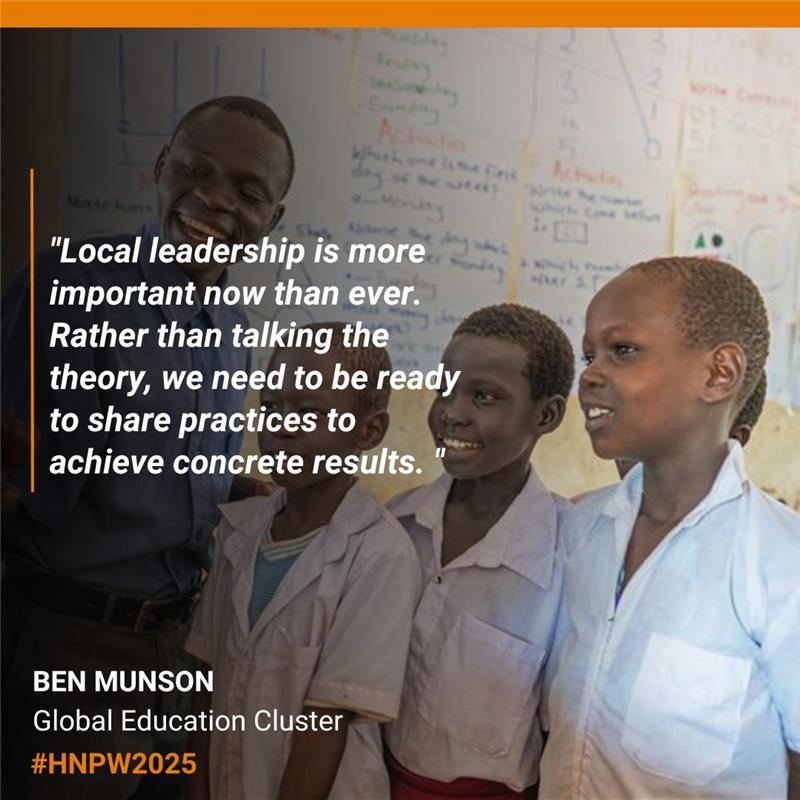
Localization Specialist, Ben Munson, from the GEC launched a new paper from the Global Cluster Coordination Group that showcases example and case studies of local leadership in practice. The paper also provides ready-to-use practical tools and guidelines to achieve concrete results.
The conclusion of the discussion was clear: local actors should lead the way, especially women-led and disability-led organizations, not as implementers but as leaders.
| 
|
| 
|
Anticipatory Action
The GEC moderated the session Anticipatory action and preparedness for education in emergencies: progress and latest evidence, organised by the Geneva Global Hub for Education in Emergencies. This session explored the potential of preparedness and anticipatory action to limit learning interruptions through making humanitarian response faster, smarter, and more cost-effective.
In recent years, the concepts of Preparedness and Anticipatory Action (AA) have gained significant momentum in humanitarian response, particularly in the education sector. While preparedness has long been a staple of humanitarian action, AA—proactively mitigating predictable crises—has only recently become a central focus. This shift is driven by increasing recognition that AA enhances response effectiveness and reduces costs. As climate change and conflict are putting unprecedented pressure on education systems, reactive responses are insufficient and more AA initiatives are emerging to ensure children remain in school during crises. GEC’s Guidance on Coordinated Anticipatory Action in Education was featured as a key resource in this emerging area.
The session included a presentation on latest evidence and trends, an intersectoral panel with GCPEA, ECW, OCHA and the EiE Hub, and an interactive feedback discussion on the EiE Hub’s forthcoming flagship product, which will take the form of an advocacy and policy document aimed at elevating these approaches in global policy discussions. Here is the session recording.
Protecting Education from Attacks
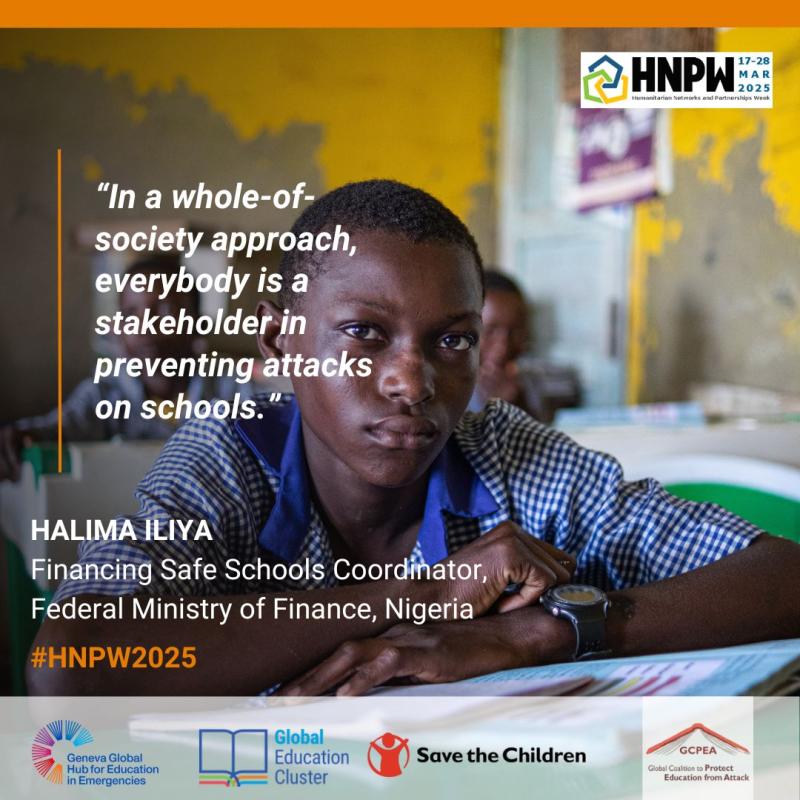
This year will mark the 10th anniversary of the Safe Schools Declaration, but attacks on education are as prevalent as ever. Organized by the GEC, Geneva Global Hub for EiE, Save the Children and the Global Coalition to Protect Education from Attack (GCPEA), the event focused on how to scale up joined-up measures to ensure that education remains protected and schools around the world stay safe for learning, even in conflict-affected contexts.
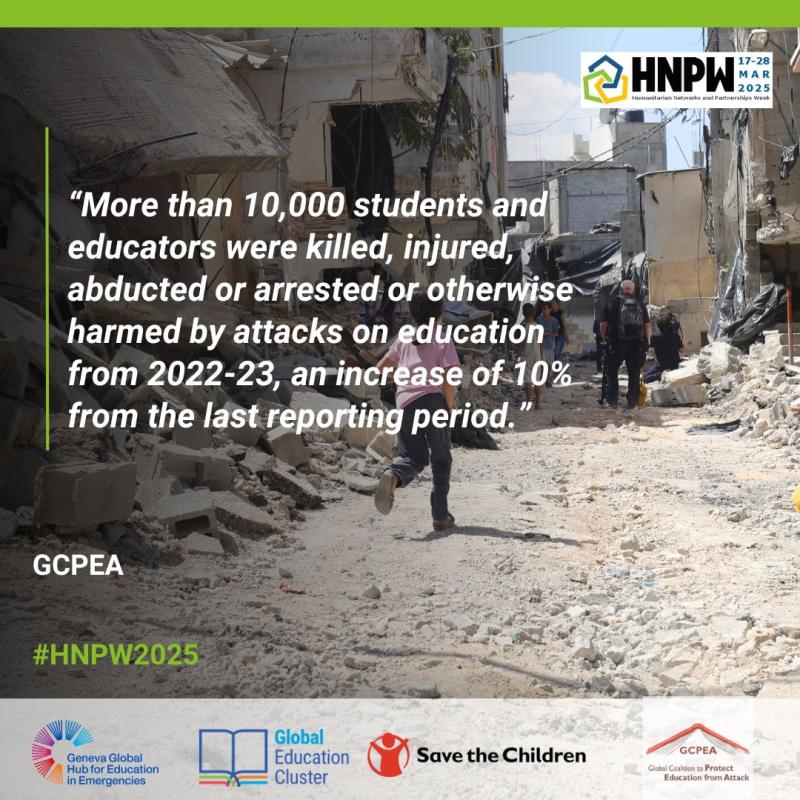
GCPEA presented the latest reporting which shows that more than 6,000 attacks on education were recorded from 2022-23 – representing an increase of 20% over 2 years. More recently, the majority of attacks have been recorded in Palestine, Ukraine, DRC and Myanmar, giving renewed impetus to mobilize political support for the Safe Schools Declaration.
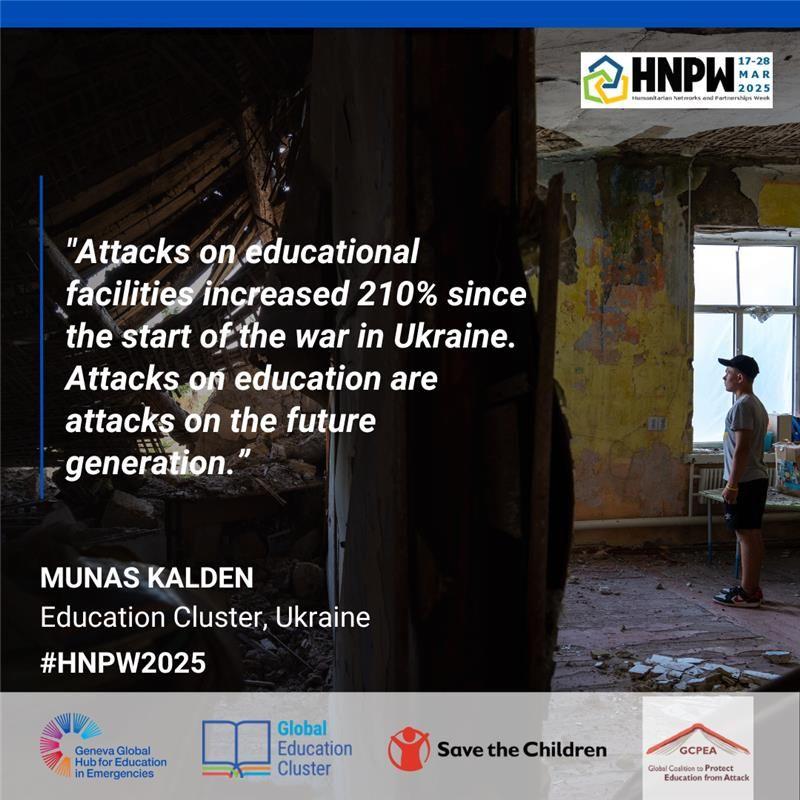
Zooming in on a country case, the Ukraine Education Cluster Coordinator explained how the ongoing attacks are impacting student’s education and future, with a 210% increase of attacks on educational facilities increased since the start of the war. Teachers have become first responders and schools remain the primary space for students to receive Mental Health and Psychosocial Support (MHPSS) services. The Education Cluster is coordinating the response to ensure the continuity of education, whether face-to-face, hybrid or through remote learning. While the frontline regions continue with online learning modalities, the Cluster and its partners have prioritized installing bomb shelters in school buildings in other regions so children can continue learning face-to-face.
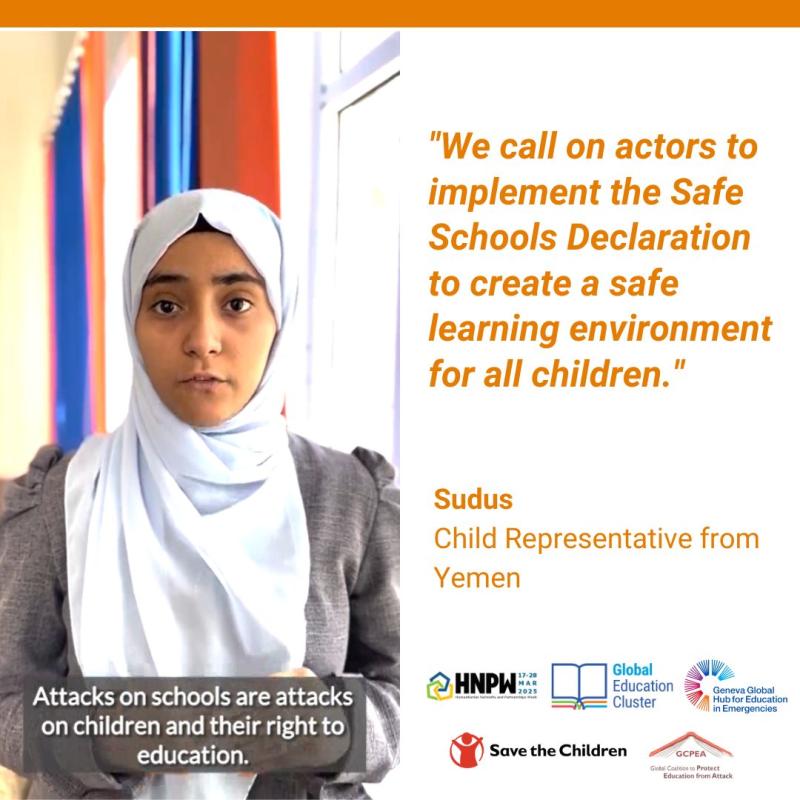
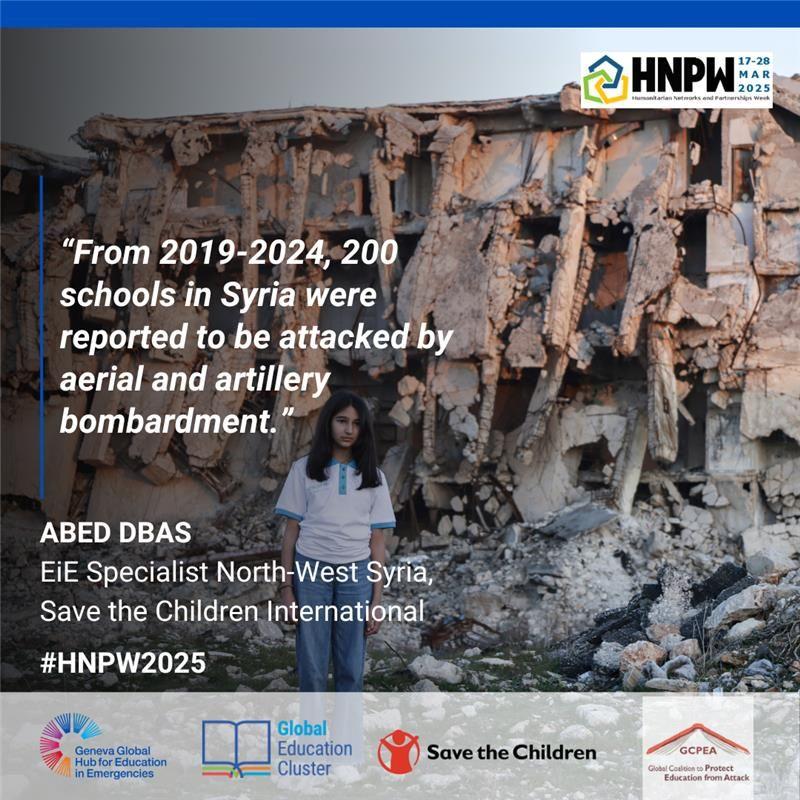
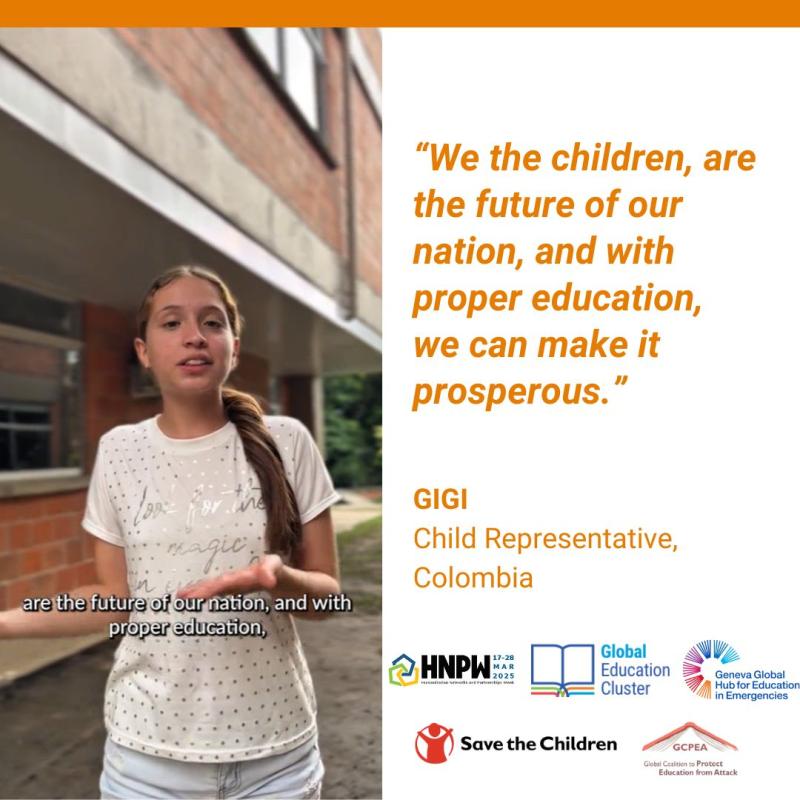
Child representatives in Yemen and Colombia recounted their experiences going to school amid conflict and called on actors to implement Safe Schools Declaration to create a safe, conducive learning environment for all children, so students can study without fear.
| 
|
| 
|
| 
|
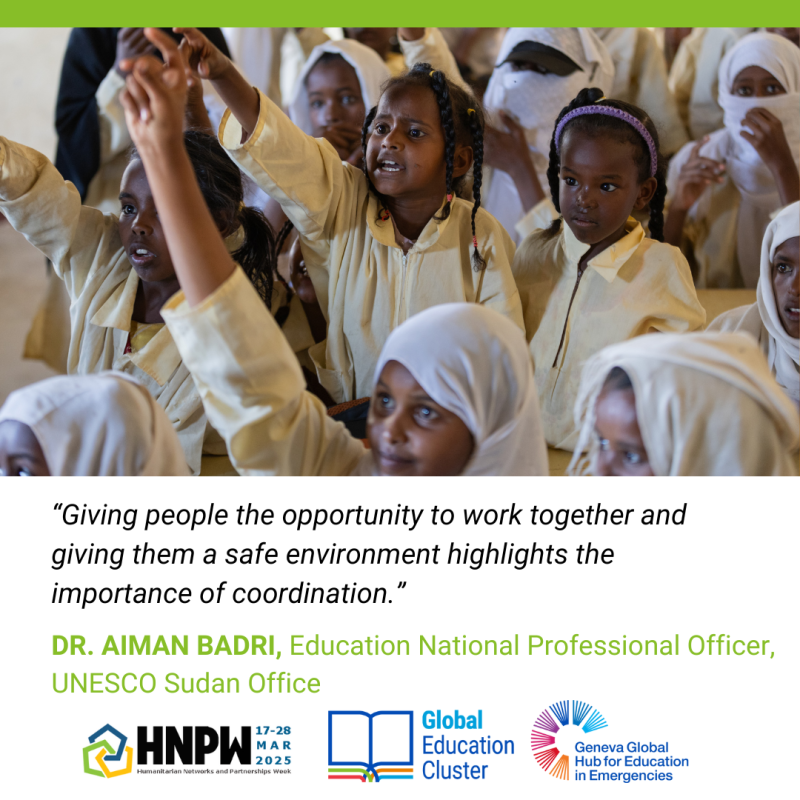
Education Across the Nexus in Sudan
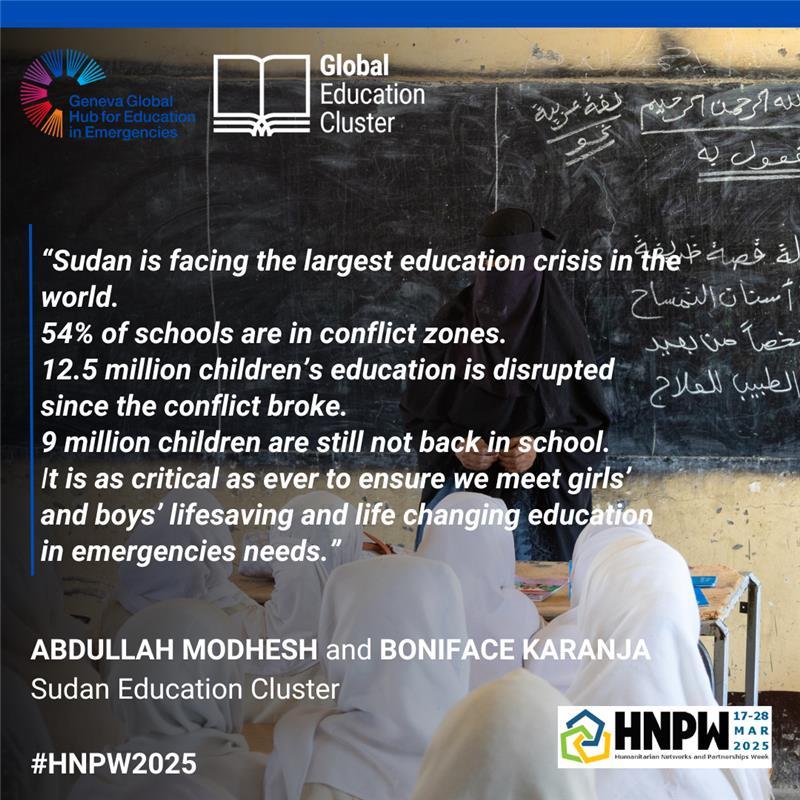
Sudan is facing the largest education crisis in the world. The conflict initially caused complete closure of all schools in the country and currently 54% of schools are in active conflict zones.
Many schools have not been able to reopen due to mass displacement and the repurposing schools as shelters, teachers not receiving salaries, lack of school supplies and more. What’s more, different scenarios across the country have required different approaches.
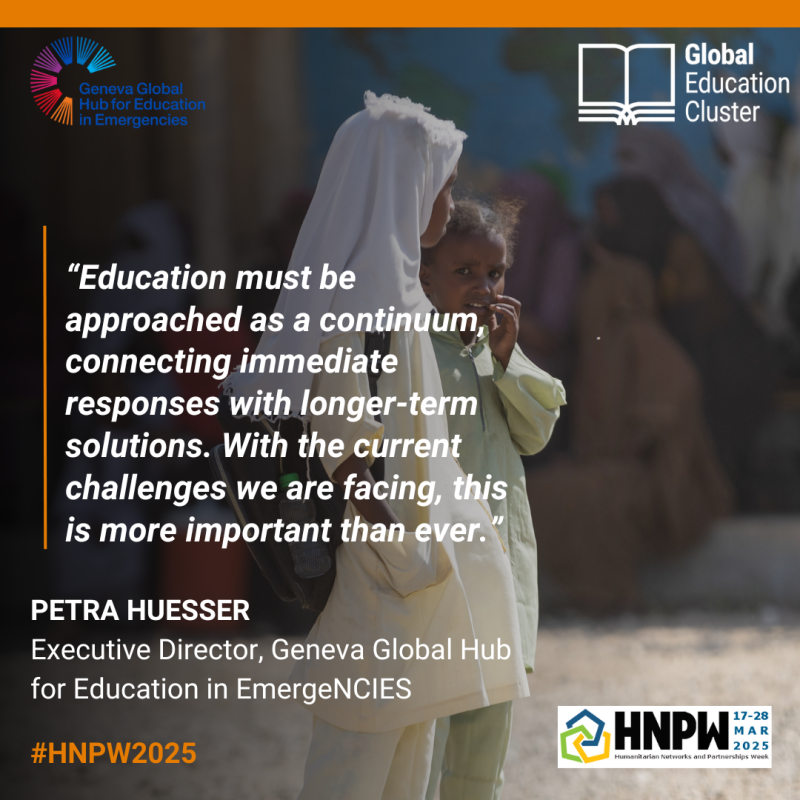
Opening the session, organized by the Geneva Global Hub for EiE and the GEC, the Hub’s Executive Director Petra Heusser set the stage for the discussion: crisis disrupts children's education. With the current challenges in the humanitarian sector, it is more important than ever that education be approached as a continuum, connecting immediate responses with longer-term solutions.
The Sudan Education Cluster Coordinators presented how the Cluster and its partners are using a nexus approach to the education crisis in Sudan. The response coordinated by the Cluster includes strengthening non-formal education opportunities, remote learning, safe learning spaces; building capacities of teachers; as well as intensive engagement with the government, local education groups and communities to reopen schools wherever possible. As schools act as a hub for other humanitarian interventions, the Cluster is reinforcing intersectoral collaboration to ensure the provision and continuity of lifesaving services.
These efforts are aimed at addressing immediate needs, while building the resilience of the education system in the longer term to improve education outcomes across the board.
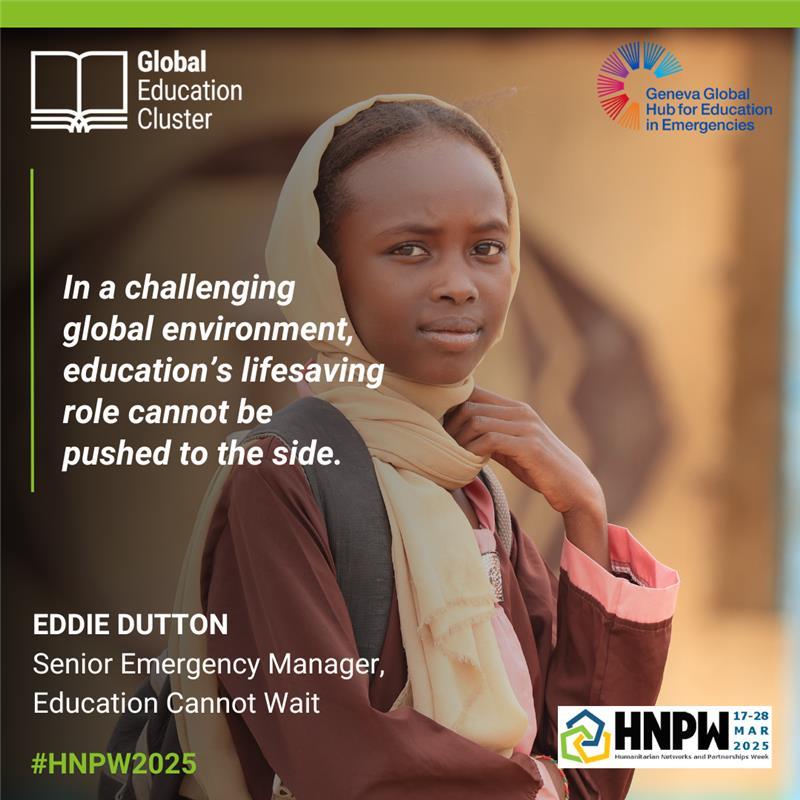
Eddie Dutton, Senior Emergency Manager from Education Cannot Wait (ECW), reaffirmed this approach, stating that as global challenges are only going to intensify, we can draw lessons from Sudan to cement education’s role as a lifesaving intervention, reimagine distinction between emergency and development, and ensure education is at the center of humanitarian action – not on the margins.
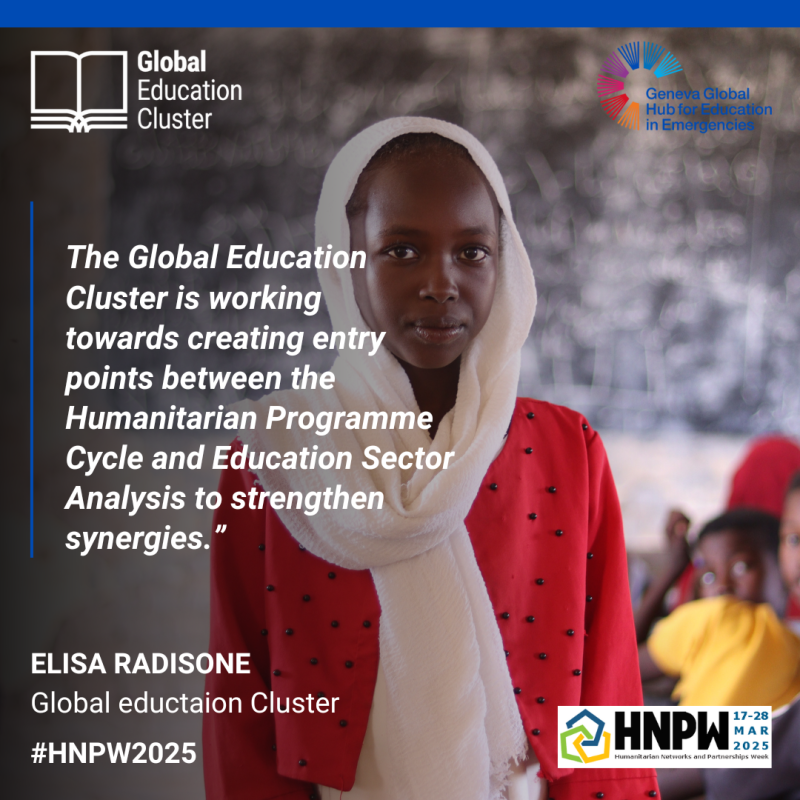
The GEC’s Knowledge Management Specialist, Elisa Radisone, presented practical tools and guidance for clusters, including the Nexus Guidance released last year, to improve joined up action between humanitarian and development actors in the education response.
In conclusion, the session demonstrated that working on immediate needs and planning for the long-term don’t have to be mutually exclusive. In fact, they should be connected. Examining successful lessons from the Sudan can illuminate more opportunities to bolster the nexus and improve education outcomes across contexts.
| 
|
| 
|

| 
|
Banner photo courtesy of Geneva Global Hub for EiE
