Request support on coordination, information management, capacity development or other education in emergencies areas.
Demande de soutien en coordination, gestion de l’information, développement des capacités et autres domaines de l'éducation en situation d'urgence.
لطلب الدعم في مجال التنسيق ، إدارة المعلومات ، تنمية القدرات أو في اي مجال من مجالات التعليم في مناطق الطوارئ
Solicitar apoyo en coordinación, gestión de la información, desarrollo de capacidades u otra áreas en educación en emergencias.

Two years after the outbreak of the conflict in Sudan, war rages on – and children are bearing the brunt, with their futures hanging in the balance.
The largest displacement crisis in the world has had catastrophic consequences for the country’s education system, bringing it to the brink of collapse. The vast majority of Sudan’s children have lost nearly two entire school years starting in April 2023 due to school closures. Since then, 54 per cent of schools across the country are in active conflict or unstable zones and 18 per cent of schools are being used as shelters, posing barriers to education access for millions of children.
State of Education in Sudan in 2025
|
“For millions of children in Sudan, education is more than a pathway to learning – it is a lifeline that would protect them from exploitation, support their mental health recovery and empower them to rebuild their lives. This conflict has shattered their dreams and left them in a highly vulnerable situation. By restoring education services for the most affected children, we can help save lives and bring children who have lost two years of schooling back to learning, preventing the loss of a generation of children in Sudan,” states Abdullah Modhesh, Sudan Education Cluster Coordinator.
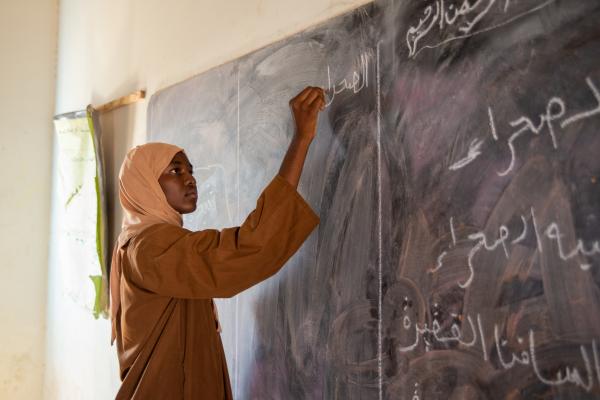
“I've been through a lot of hardship; we had to leave because of a sudden bombarding, we didn't expect it to happen, and we didn't know where to go. We left with nothing but the clothes on our backs, and even our bags were lost along the way.” -15-year-old Alaa
Education is lifesaving: the EiE response in Sudan
The response, coordinated by the Sudan Education Cluster, is prioritizing immediate education services to ensure continuity of learning and provide urgent lifesaving support to children.
To mount the most comprehensive and effective intervention, the Cluster has tailored approaches based on the differing levels of need across the country. In hotspot areas, where schools are closed, the Cluster is coordinating the provision of alternative learning opportunities in safe learning spaces as well as remote and e-Learning. In relatively safer states, the Cluster is engaging with the government and partners to reopen schools, while at the same time working closely with the Shelter and Protection Clusters to ensure dignified relocation of IDPs from schools currently used as shelter. In areas that are deemed safe where majority of schools have reopened, the Cluster is facilitating children’s reintegration by providing learning materials, psychosocial support and other resources.
But the Education in Emergencies response is not only about learning: education is a portal to the most essential services in a crisis. Through close collaboration with WASH, Protection, Food Security, Health, and Nutrition Clusters, the EiE response supports the integrated delivery of services to children in schools and learning centers.
"In the Sudan emergency, education is not a secondary need—it is lifesaving. […] Education connects children and families to the broader humanitarian response, and without it, their chances of survival and recovery diminish, states Nazik Elamin, Program Manager at AORD, a cluster partner. In Sudan, keeping education going is not a luxury—it’s a lifeline. […] because without it, children risk losing not only their future, but their present."
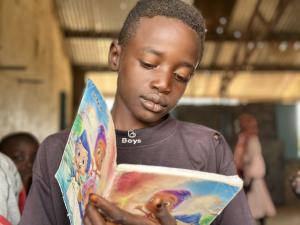
Key pillars of the response include the provision of essential learning and lifesaving skills in Safe Learning Spaces, emergency repair of education spaces with gender-sensitive WASH facilities, school feeding programs, teacher training, provision of learning materials, and more. Schools and learning spaces are also effective platforms for the dissemination of lifesaving information relating to health and hygiene, gender-based violence and other protection risks. To this end, cluster partners are conducting awareness-raising campaigns to reach at-risk children, and parent-teacher associations.
With learning centers as the entry point of the emergency response, teachers are on the frontlines of service delivery. Education personnel who are closely supervising students daily are able to identify risks quickly and provide direct support to crisis-affected children, as well as referrals to specialized services relating to gender-based violence, health and psychosocial support.
A teacher in the Northern State says, “Even in emergencies, our children come here every day. It gives them a sense of normalcy, routine, and hope.”
Linking community priorities with the humanitarian response
Despite facing dire circumstances amid the conflict, families continue to prioritize education for their children.
“We’ve seen parents walk miles to bring their children to these centers,” recounts a representative from Sadagaat, a cluster partner. “Not just for education, but because they trust these spaces to keep their children safe, healthy, and emotionally supported.” A father from Kassala confirms, “This learning space is the safest place for my children. It is where they are protected, supported, and given the tools to dream again.”
However, the recent funding crisis has threatened the humanitarian aid sector, with acute effects on education in emergencies. Under the original 2025 Humanitarian Needs Response Plan (HNRP) for Sudan, USD 108 million was to be allocated targeting 3 million school-age children. After intensive advocacy efforts from the Sudan Education Cluster, education was successfully secured as a part of the HNRP, however initiatives are capped at USD 10.5 million with a target of 2.6 million school-age children.
“We cannot overstate the impact the funding crisis will have, denying millions of children access to education in Sudan,” states Boniface Karanja, Sudan Education Cluster Coordinator. “Education needs to be a vital part of the humanitarian response, from Day 1, in order address immediate needs of crisis-affected children, respond to the priorities of communities, and restore long term stability in the country.”
For now, the work continues to save the lives of Sudan’s children of war and turn their deferred dreams into a reality.
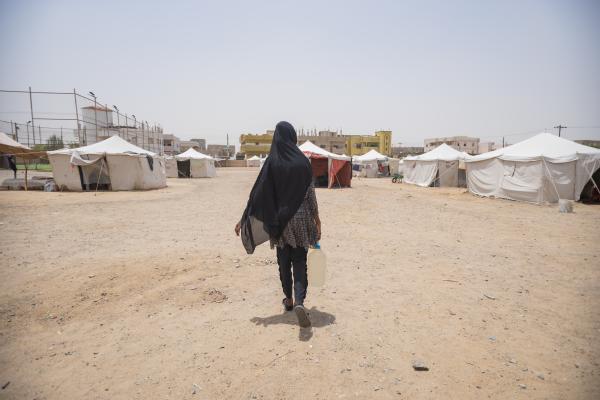
“Even when the opportunity arises for us to return to school, with everything happening and as dire as the situation is, will we be able to catch up and continue studying? Stop the war. Think of the children. Focus on education and make sure children get quality education.” -15-year-old Asawyer
Photos courtesy of UNICEF
